

The aim of the game at Blue Ridge Hotel Textiles is constant improvement.
We strive to achieve improvement with every hotel product we manufacture, starting with every day spent in the factory to improving every minute spent in bed.
The collective sum of that progress – across all departments on the Team – is focused on delivering improved sleeping experiences on a hotel bed. Directly or indirectly, every piece of work completed in our factories makes a difference.
Developing a hotel pillow, and ultimately bringing that improved sleeping experience to the bed, is a complex process. But we’ve broken it down and made it a straightforward process to understand in these seven main steps.

Throughout the year, our pillows, along with our understanding of their performance, is constantly evolving. This is down to the work done both in our factory and in the hotel. It’s a continuous, cyclical process and we start it by evaluating ways we can improve the pillow, with the materials and tools we have available. This is done following two paths.
The first is looking at the outer surfaces of the pillows, those you can see from the outside: the external fabrics and workmanship parts of the pillow.

The second part is the internal development, which are the parts inside the outer fabric such as internal fabric constructions (pillow-in-a-pillow, multiple-chambered, etc.), sewing and filling materials. Development of the internals have a relational-effect on the external materials too; with a compromise needed to optimize both.
We must also work with two notable constraints too: time and budget. We need to optimize our resources to ensure the focus is on areas that will bring the most efficient gains. With a cost cap, we cannot afford to explore every avenue or item that suggests it may bring comfort. For the purposes of this article, we’ll chose to focus on what it looks like when we bring internal updates to the process.

For our internal product development, the first step is to identify how we want to improve the comfort of the pillow. Once we’ve decided what areas we want to explore, our team investigates ways of delivering those improvements within the requirements and constraints we have.
Then it’s all about testing the different options to understand if we can manipulate the filling and flow in the way we want to. If our initial trials are successful, then it’ll go to durability testing (“stomp-testing”, recovery, etc.) and commercial laundering, where the product is put through its paces. This is where we can get a much better idea over whether it has delivered improved performance or not. As part of the drive to bring performance and cost efficiency together, we have a sliding scale of comfort coefficients based on products’ predecessor success.
That is where the next step comes in handy…

An area of growth in recent years has been computer simulation and monitored sleep trials.
We can model the impact of updates and new materials we bring to the pillow, as changes both internally and externally have a bearing on how it performs in a hotel environment. There are numerous ways we can do this and numerous data points we can evaluate.
Some of the most important or promising changes will also be tested by partner hotel properties, where we can gain more real-time feedback from housekeeping and guests, and delve deeper into hotel guest feedback to see if the upgrade is working as expected. Then we head to the next stage of the process.
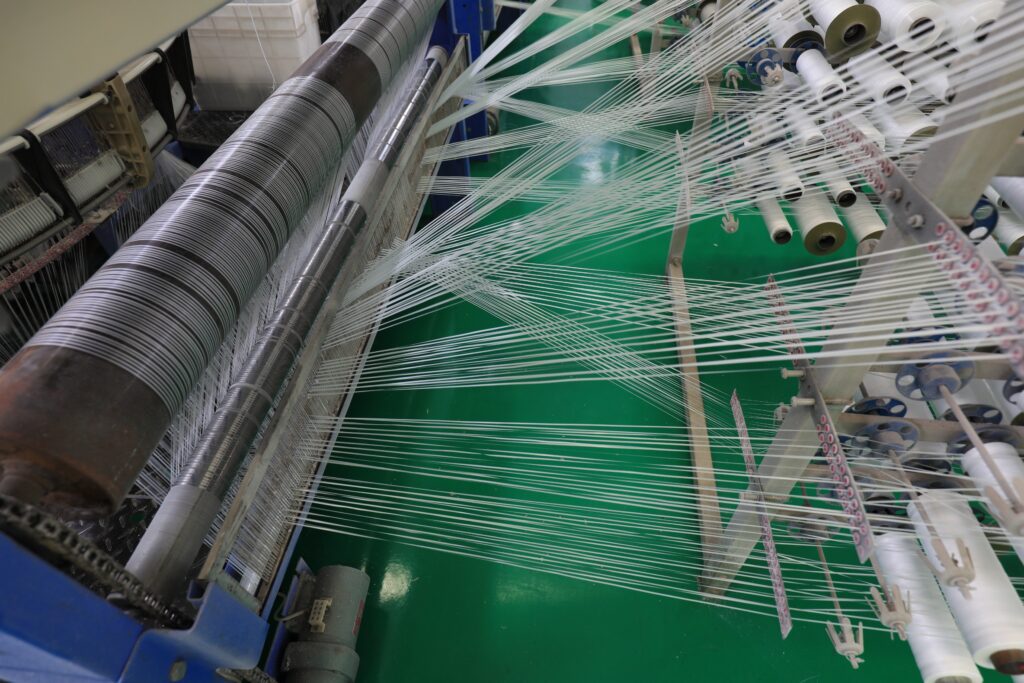
Many of the materials on our pillows are made in-house. The work to produce dying, finishing, processing, and filling is extensive. Some can be turned around quickly, within a day in some cases, while others can take weeks or months to finalize.
For an internal component, if the testing and data we have collected suggests that it will bring a performance and comfort gain, then it will be signed off. From there our PD team produces a specification that can go to manufacturing where test production runs are completed and the product goes to final assembly. Once the product has been made, our inspection team evaluates all parts and workmanship before it can be released for future production.
It’s a huge team effort across departments to get the individual parts to the factory. For major design changes and all-new material development, many months will be spent designing, testing, manufacturing and building the product before it even gets to its destination: the hotel guest. The work doesn’t stop there, though.

Once the product has hit the hotel, we need to understand if it is performing as we expected. We have dozens of partner-properties to aid with this. Our team based in Seattle, California and internationally, will be poring through the hotel feedback and reviewing whether it’s performing as it should. When we’re working with larger upgrades or all-new materials, it’s more challenging to analyze across a short time horizon. Thus, we compare feedback from sources over longer periods of time.

We’re also looking at any broader characteristic changes or guest satisfaction trends. There have been dramatic changes to textile materials over the past few years and many have affected the expectations of hotel guests. We compare our product innovations to the expectations of users, making sure we deliver or exceed what each guest expects.

Described as the most important sensor in the bed, the hotel guest plays a critical role in helping us understand the products and updates we bring.
The PD and sales team work closely with them to optimize the product specifications, such as fill weights, mixes and blends, and constructions, all can be impacted by new upgrades. But perhaps more crucially for large product upgrades or new introductions, hotel guest feedback is vital in understanding the changes in “pillow behavior” and if it is delivering the comfort and experience expected.

The factors found by hotel guests and our PD Team are then debriefed to determine if the product is delivering.
The work continues back at our factories, looking for new ways to improve the manufacturing process, gaining efficiencies and better costs. They deliver the findings and determine how to proceed from there.
And we’re back to step one! The process continues throughout the year as we push to find better solutions for hotel customers and their guests, and to out-develop our competition.
At Blue Ridge Hotel Textiles, we understand the importance of a good night’s sleep and a healthy hotel environment.